Social Media Marketing Platforms for Businesses stopped being just a fun distraction somewhere around 2015. Now, in 2026, they’re pretty much mandatory for growth, visibility, and sales. Social media is no longer optional-it’s where customers discover brands, build trust, and decide who to buy from.
But I get it. You open your laptop, see Instagram, Facebook, LinkedIn, YouTube, TikTok, and a dozen other platforms, and your brain instantly goes, “Nope.” Which ones actually matter? Where should you invest your limited time and energy? Does facebook marketing for businesses still work, or has everyone’s grandma finally taken over the platform?
Here’s what I’ve learned after years of hands-on work at Digiverze: there’s no one-size-fits-all answer. A bakery needs a very different mix of instagram marketing for businesses and local visibility compared to a software company relying on linkedin marketing for businesses to reach decision-makers. A brand that explains complex products might benefit more from youtube marketing for businesses than daily short-form posts. Context matters.
Yet, businesses keep searching for the “perfect” social media strategy-as if there’s a secret formula that works for everyone. The truth is simpler and more practical. The right social media marketing platforms depend entirely on who you’re selling to, how they make decisions, and where they already spend their time online.
Table of Contents
ToggleWhy Is Social Media Important for Businesses in Today’s Digital World?
Let’s start with a number that puts things into perspective: 4.9 billion people actively use social media. That’s more than half the global population, spending an average of 2.5 hours every day scrolling, watching, and engaging across different social media marketing platforms for businesses. If your brand isn’t visible where this time is being spent, you’re missing where real buying decisions actually begin.
Today, social media is no longer limited to brand awareness-it directly impacts revenue. When people are ready to buy, their first step often isn’t Google or a company website. They head to Instagram to check brand consistency and visuals, Facebook to read real customer opinions, LinkedIn to assess credibility, and even YouTube to watch honest reviews. This shift is exactly why businesses looking for the best digital marketing services in Ahmedabad focus on instagram marketing for businesses, facebook marketing for businesses, linkedin marketing for businesses, and youtube marketing for businesses as performance-driven channels-not just posting platforms.
Here’s a real example. I recently bought running shoes, and my process was simple: I checked the brand’s Instagram for authenticity, read Facebook comments from actual customers, watched a few YouTube reviews, and then made the purchase. That’s modern consumer behavior-and your audience follows the same trust-building journey before choosing your brand.
Another major advantage of social media is instant, direct communication. Someone discovers your product at 10 PM on a Wednesday and has a quick question. Where do they reach out? Your Instagram DMs or Facebook Messenger. Respond quickly with the right information, and you’ve likely secured the sale. Delay the response, and a competitor with stronger Facebook marketing for businesses or Instagram marketing for businesses steps in instead.
From a cost perspective, social media marketing consistently outperforms traditional advertising. Billboards, radio spots, and print ads demand high budgets with limited tracking. In contrast, modern social media marketing platforms for businesses allow even small brands to target specific audiences, test campaigns in real time, and achieve measurable ROI-often at a fraction of the cost.
Benefits of Using Social Media
Let’s talk real benefits, not fluffy marketing speak.
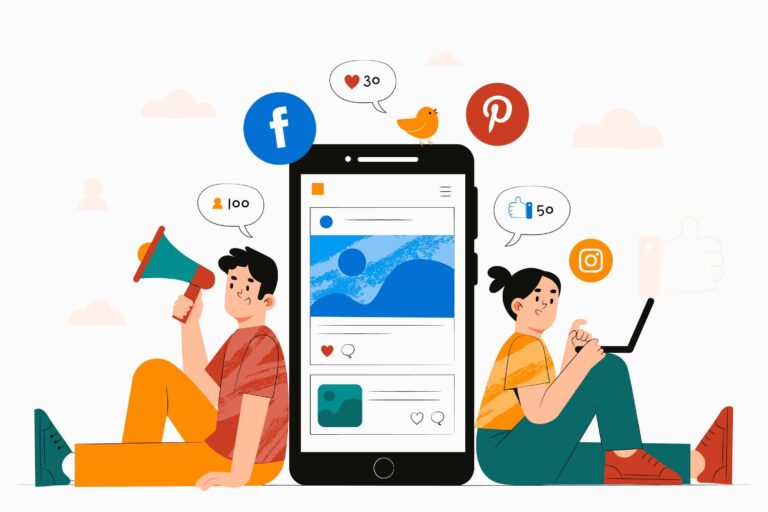
Brand awareness sounds boring until you realize every post potentially reaches not just your followers, but everyone they know. Sarah likes your post? Her 500 friends might see it. That’s how small businesses blow up seemingly overnight. One good post hits the algorithm right, suddenly you’ve got thousands of new eyeballs on your stuff.
Direct conversations with customers change everything. Old-school advertising was like shouting at people and hoping they listened. Social media? People talk back. They ask questions. They tell you what they love and what drives them crazy. Those conversations build real relationships. And people buy from businesses they feel connected to.
Website traffic increases when you’re strategic about it. Every post is a potential gateway to your site. Create content people actually want to read or watch? They’ll click through. Those clicks turn into email signups, sales, consultations—whatever you’re after.
Lead generation has gotten insanely sophisticated. You can now target ads to people based on their job title, income level, recent life events, hobbies-it’s almost creepy how specific you can get. But it works. You’re not casting a wide net hoping to catch something. You’re fishing with a spear.
Free market research happens automatically. Watch which posts get engagement. Read the comments. See what questions keep popping up. That’s your audience literally telling you what they want. Companies pay thousands for focus groups to get insights you can gather just by paying attention.
These aren’t vanity metrics. This is stuff that directly impacts whether your business grows or stagnates.
How Businesses Choose Social Media Platforms Based on Goals and Audience
Here’s where most businesses screw up-they try to be everywhere. Don’t do that. You’ll burn out, your content will be mediocre, and you’ll wonder why social media “doesn’t work.”
Start with your actual goals. What do you want? More foot traffic to your physical store? B2B leads? Online sales? Brand awareness? Each platform does different things well. LinkedIn’s amazing for B2B. Instagram sells products visually. Facebook connects local businesses with nearby customers. Trying to use LinkedIn like Instagram is like using a hammer to tighten a screw-the wrong tool for the job.
Know your audience-actually know them. Who are you trying to reach? A 50-year-old lawyer and a 22-year-old college student aren’t hanging out on the same platforms. Your target customer is on one, maybe two platforms regularly. Find those platforms. Ignore the rest for now.
Be honest about what content you can create. Can you make videos consistently? Great-YouTube and Instagram Reels are options. Hate being on camera? That’s fine-stick to images and text. Forcing yourself to make content you hate shows, and audiences can tell.
Check your competition, but don’t copy them. See where they’re active and getting engagement. If three competitors are killing it on LinkedIn and ignoring Instagram, that tells you something about your industry.
Face reality about your resources. Got a team of one working on this? Pick one platform. Master it. Then maybe add a second. I’ve seen tiny teams dominate on Instagram while big companies with huge budgets fail because they spread themselves too thin.
And track what actually works. Maybe you thought LinkedIn would be your goldmine, but Instagram’s driving all your sales. Listen to the data, not your assumptions.
Instagram: Still the King for Visual Brands
Instagram has over 2 billion users, and it’s not slowing down. Among today’s social media marketing platforms for businesses, it’s one of the most powerful places to build visibility. If your business is even slightly visual-products, services, or anything people want to see-Instagram should absolutely be part of your strategy.
Many people assume Instagram is only for fashion brands and influencers. That’s a myth. We’ve driven strong results through instagram marketing for businesses in industries like law firms, B2B software, and accounting. The key is creativity. Show your team, highlight client wins, share real stories, and give people a genuine behind-the-scenes look at how your business operates.
Stories are criminally underused. They’re at the top of everyone’s feed, they’re casual, and they disappear after 24 hours so people don’t expect perfection. Use them for quick updates, polls, questions, behind-the-scenes stuff. I’ve seen businesses get more engagement from Stories than from their carefully crafted feed posts.
Reels are how you grow now. Yeah, making short videos takes effort. But one Reel can reach 10,000 people who’ve never heard of you. That doesn’t happen with regular posts anymore. Reels that teach something, make people laugh, or trigger an emotional response tend to explode.
Shopping features remove so much friction. People see your product, tap it, buy it-all without leaving Instagram. Every step you remove from the buying process increases sales. It’s that simple.
Influencer collabs work better here than anywhere else. Find someone with your target audience, do something together, and tap into their followers. It’s more authentic than ads, especially with younger buyers.
The mistake everyone makes? Posting randomly. Three posts on Monday, nothing for two weeks, then five posts on Friday. Your audience forgets you exist. Consistency beats quality every single time. Post three times a week consistently, and you’ll crush the person posting ten times one week and zero the next.
Hashtags still work, despite rumors of their death. Mix big ones with niche ones. Don’t just spam the most popular tags – use ones your specific audience actually searches.
Facebook: Your Grandma's Not the Only One There
Everyone loves to hate on Facebook. “It’s dead,” they say. “Only old people use it.” But that couldn’t be further from the truth. With nearly 3 billion active users, it remains the largest platform by far-and a powerful channel for facebook marketing for businesses that want reach, targeting, and real results.
Local businesses need to be on Facebook, period. Your business page shows up in local searches. People check your reviews before visiting. They message you with questions. It’s basically a second website that people actually check.
Facebook Groups are wildly underrated. Create a group around something your customers care about. Not your products-something related they’re passionate about. Become the hub for that community. Those people become your most loyal customers because they feel connected to something bigger than just buying your stuff.
Facebook ads are cheap and crazy targeted. You can reach people by location, age, interests, life events (just got engaged, recently moved, new parent). The interface is simple enough that you can figure it out without hiring an agency.
Events work great if you host anything-workshops, sales, open houses. Create the event, invite people, send reminders. Events get shared organically too.
Video content dominates Facebook. Go live occasionally. Share regular videos. They get way more engagement than text or images. You don’t need fancy equipment-phone videos work fine if the content’s good.
We recommend Facebook for local businesses and anyone targeting people over 35. Yeah, teenagers aren’t here. But people with actual money to spend? Still very much on Facebook.
Messenger is clutch for customer service. Lots of people prefer messaging over calling or emailing. Fast responses here convert browsers into buyers.
LinkedIn: Where B2B Companies Should Live
If you sell to other businesses, LinkedIn needs to be your focus. This isn’t optional. It’s the platform where linkedin marketing for businesses works best-because executives, managers, and decision-makers are already there, actively scrolling while they’re in work mode.
Personal branding matters more here than company pages. When actual humans from your company share insights and engage, it builds way more trust than generic corporate posts. People do business with people, not logos.
Long-form content actually works on LinkedIn. Write articles about industry challenges, share genuine insights, provide value. This positions you as an expert. People see that expertise, trust builds, eventually they reach out.
LinkedIn Groups are where industry conversations happen. Join relevant ones. Participate genuinely-answer questions, share resources. Don’t just spam your links. Build relationships that turn into business.
LinkedIn ads cost more than Facebook or Instagram, but the leads are usually higher quality. You’re reaching people by their actual job title, company size, industry. If you sell enterprise software to CTOs, you can target literally just CTOs. That precision is worth the premium.
We’ve generated serious B2B leads through LinkedIn. The key? Stop being salesy. Share actual insights. Ask interesting questions. Be helpful. Business follows.
Company pages still matter-post updates, share news, promote job openings. Get your employees to engage with company content to amplify reach.
YouTube: The Long-Term Investment That Pays Off
YouTube is the second-biggest search engine globally. People go there to learn, solve problems, and research purchases-making youtube marketing for businesses a powerful way to stay visible. If you can create helpful videos, your brand absolutely should be here.
Your videos don’t die after 24 hours like other platforms. A YouTube video you publish today might still bring in views and leads three years from now. That’s rare in social media. Most content has a shelf life of hours.
Educational content crushes it. Teach people something related to your business. How-to videos, tutorials, explanations of complex topics. People actively search for this stuff. You become the helpful expert, not the pushy salesperson.
Product demos influence purchases heavily. Tons of people watch YouTube before buying anything significant. Show your product working, explain features, demonstrate value. This helps people feel confident buying from you.
SEO matters here-optimize your titles, descriptions, tags. Optimized videos show up in YouTube and Google search, bringing organic traffic long-term without ad spend.
Building subscribers creates an actual audience that wants to hear from you. Unlike Instagram where the algorithm hides your posts from your own followers, YouTube subscribers actively chose to see your content.
Consistency matters more than quality. Your first videos will probably be awkward. That’s totally fine. Start simple, improve over time. Waiting until you can make “perfect” videos means never starting
Conclusion: Choosing the Right Social Media Platforms to Grow Your Business
Stop trying to be everywhere. Seriously. Pick one or two best social media marketing platforms for businesses where you can create decent content consistently.
- Selling visual products or services? Instagram’s probably your answer.
- Local business? Facebook isn’t optional.
- B2B company? LinkedIn. Just LinkedIn.
- Can commit to making videos? YouTube pays off long-term.
The businesses winning at social media treat it like a marathon. You’re not going viral overnight (probably). But show up consistently with helpful content? You’ll build an audience that trusts you and eventually buys from you.
At Digiverze, we’ve seen every possible approach. The copycat strategies that fail. The spray-and-pray approaches that waste time. The focused, consistent efforts that actually work. Every business is different. What works for a restaurant won’t work for a consulting firm.
Platforms change constantly-new features, algorithm updates, trends shifting. Stay somewhat current, but don’t chase every shiny thing. Find what works, do more of it.
Start with one platform. Get good at it. Then maybe expand. Being really strong on one platform beats being mediocre on five.
Want to stop guessing and start seeing actual results? We help businesses figure out exactly where to focus and how to make it work for their specific situation. No cookie-cutter strategies. No BS. Just what actually works for your business.
Ready to make social media actually work for you? Let’s grow your business with our top social marketing services in Ahmedabad.
Frequently Asked Question
There is no single best social media platform for every business in 2026. The right platform depends on your business type and audience. Visual brands and local businesses often perform well on Instagram, while service providers and B2B companies see better results on LinkedIn. Businesses focused on education and long-term visibility benefit from YouTube. Choosing platforms based on goals works better than following trends.
Social media is important for businesses in 2026 because customers use it to judge trust and credibility before making decisions. People check social profiles to see reviews, content consistency, and real activity. Social media also helps businesses stay visible without depending only on ads. A strong presence builds familiarity, which makes customers more comfortable reaching out or buying from a business.
Most businesses should focus on two to three social media platforms instead of trying to manage everything. Using too many platforms often leads to inconsistent posting and poor results. It is better to choose platforms where your audience is active and post regularly there. Quality, consistency, and engagement matter more than being present on every social media platform available.
Businesses choose the right social media platforms by understanding their audience, goals, and content capacity. A local business may focus on platforms that support nearby reach, while a professional service may choose platforms where decision-makers spend time. Businesses should also consider the type of content they can create easily. Choosing platforms based on audience behavior leads to better engagement and results.
Yes, Instagram is still very useful for business marketing in 2026. It helps businesses build visibility, stay connected with audiences, and share updates in a visual way. Instagram works well for both products and services, especially through Reels and Stories. Businesses that post consistently and focus on real content often see better engagement and inquiries over time.
No, LinkedIn is not only for large companies. Small businesses, consultants, freelancers, and service providers can benefit greatly from LinkedIn in 2026. It helps build professional trust, share expertise, and attract quality leads. Even businesses with small teams can grow visibility by sharing experiences, lessons, and insights instead of promotional content.
Yes, social media can help small businesses grow in 2026 when used with clarity and consistency. It allows small brands to compete with larger ones by building trust and visibility over time. Social media helps businesses stay top of mind, answer customer questions, and show real work. Many small businesses generate steady inquiries simply by being active and authentic on the right platforms.